Risk Assessment Services


In today’s digital ecosystem, organizations operate in an environment filled with evolving cyber threats, regulatory pressures, and operational risks. A structured risk assessment helps businesses identify vulnerabilities, evaluate potential threats, and understand how security risks can impact operations, data, and reputation.

Risk assessment is a systematic process used to identify, analyze, and prioritize risks affecting information systems, applications, networks, and business processes. The objective is simple — discover weaknesses before attackers do and implement effective controls to reduce exposure.

By conducting a comprehensive risk assessment, organizations gain visibility into their security posture and can make informed decisions about security investments, compliance readiness, and long-term risk management strategies.
Why Risk Assessment is Important


Modern organizations depend heavily on digital infrastructure. Without a clear understanding of risks, businesses may unknowingly expose sensitive data or critical systems to cyber threats.

A well-executed risk assessment helps organizations:

  • Identify critical assets and sensitive information
  • Detect vulnerabilities across systems and applications
  • Evaluate potential cyber threats and attack vectors
  • Measure the likelihood and business impact of risks
  • Prioritize remediation efforts effectively
  • Strengthen compliance with industry standards

Risk assessments enable proactive security instead of reactive incident handling, allowing companies to prevent breaches rather than respond after damage occurs.

Key Benefits of Risk Assessment


Implementing regular risk assessments provides measurable business advantages:

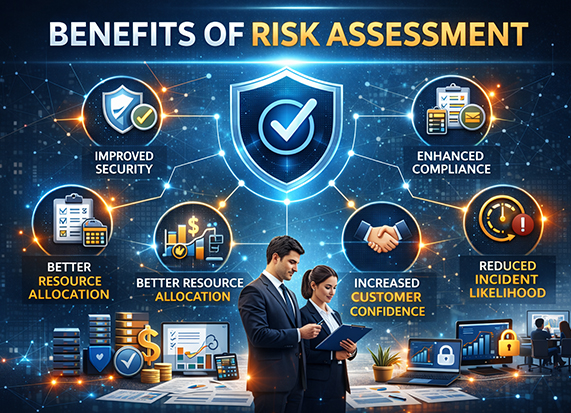
  • Improved cybersecurity maturity
  • Reduced likelihood of data breaches
  • Better allocation of security budgets
  • Enhanced customer trust
  • Stronger regulatory compliance
  • Faster incident response readiness

Risk assessments also align cybersecurity initiatives with business objectives, ensuring security decisions support organizational growth.

Frequently Asked Questions (FAQs)

A risk assessment is a structured process used to identify, evaluate, and prioritize security risks affecting an organization’s systems and data.

Most organizations conduct assessments annually, though high-risk industries may require more frequent evaluations.

Yes. Many standards such as ISO 27001, PCI DSS, and GDPR require periodic risk assessments.

Risk assessment identifies and prioritizes risks broadly, while penetration testing actively simulates attacks to exploit vulnerabilities.

The duration depends on organizational size, infrastructure complexity, and assessment scope, typically ranging from a few days to several weeks.